Monthly Budget: How I Built a Monthly Budget on a $1,500 Income

Managing money on a tight budget can feel impossible, but with a clear plan, anyone can take control of their finances. When I first started working with a $1,500 monthly income, I felt overwhelmed. Bills, groceries, transportation—everything seemed to eat up my paycheck. But over time, I developed a budgeting syManaging money on a tight budget can feel overwhelming. When I first started working with a $1,500 monthly income, I had no idea how I would cover rent, utilities, groceries, and still save anything. I constantly felt stressed, unsure if I was spending too much in the wrong areas. But over time, I developed a budgeting system that not only allowed me to pay my bills on time but also helped me save and plan for the future.
In this article, I will walk you through how I organized my monthly budget, tracked my expenses, prioritized my spending, and found practical ways to save even on a limited income. This guide is for anyone living paycheck to paycheck, looking for realistic steps to take control of their money without feeling deprived.
Step 1 – Understand Your Income and Expenses
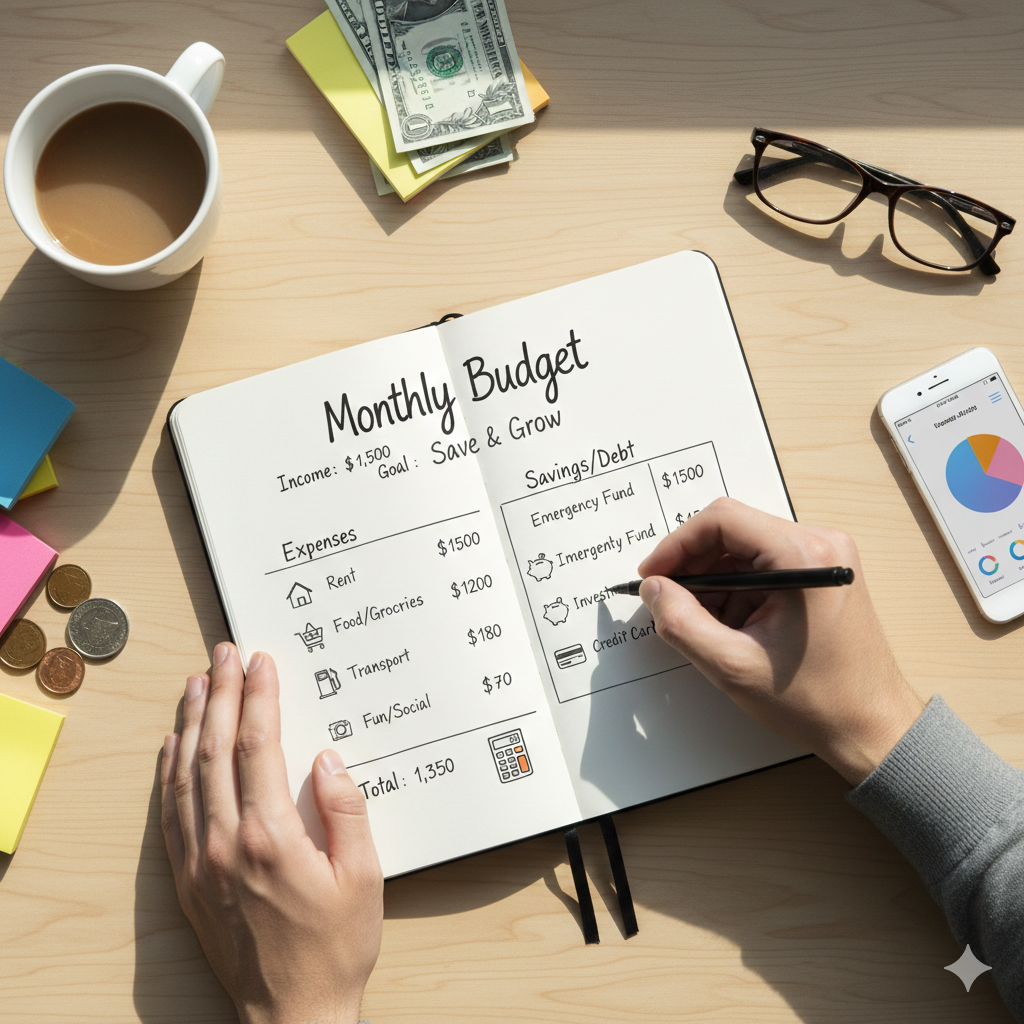
The first step in budgeting is knowing exactly how much money you have and where it’s going. For me, this meant creating a detailed list of monthly income and expenses:
- Income: $1,500
- Rent: $600
- Utilities (electricity, water, internet): $150
- Groceries: $250
- Transportation (bus, gas, maintenance): $100
- Debt / loans: $100
- Entertainment & miscellaneous: $100
Writing everything down gave me a clear picture of my financial reality. I realized that while rent and groceries were fixed, I could adjust my entertainment spending. Tracking your income and expenses is critical. You can use a spreadsheet, budgeting app like Mint or YNAB, or even pen and paper—the tool doesn’t matter, clarity does.
💡 Tip: Review past months of bank statements to identify hidden expenses you might forget.
Step 2 – Categorize Your Spending
Once I had a clear list of expenses, I divided them into three categories:
- Needs: Rent, utilities, groceries, transportation
- Wants: Dining out, entertainment, hobbies
- Savings / investments: Emergency fund, small savings
This step was eye-opening. I noticed that most of my overspending was in the “wants” category, which is the easiest place to make small adjustments. Categorizing spending helps you prioritize essentials first, then allocate leftover money for savings and discretionary spending.
💡 Tip: Always prioritize needs over wants. Savings should feel like a fixed expense, not an afterthought.
Step 3 – Set Spending Limits
After categorizing, I assigned monthly limits for each category:
| Category | Budgeted Amount |
|---|---|
| Rent | $600 |
| Utilities | $150 |
| Groceries | $250 |
| Transportation | $100 |
| Entertainment | $50 |
| Savings | $50 |
Setting limits makes your budget actionable. You know exactly how much you can spend in each category without going over. The most important rule: don’t touch your savings until the month is over. Treat it like a bill.
💡 Tip: Small adjustments, like cooking at home instead of ordering takeout, can free up extra money for savings without feeling restrictive.
Step 4 – Track Your Spending Daily
To stick to the budget, I logged every expense daily. Even small purchases matter. For example, I realized I was spending $25 per week on coffee, which added up to $100 per month—money I could easily redirect to savings.
Tracking helps you spot patterns and make adjustments. If one week you overspend on groceries, you can balance it the next week instead of waiting until the end of the month. I personally use a simple Google Sheets tracker where I enter expenses, categorize them, and check the totals weekly.
💡 Tip: Use apps with notifications to alert you when you are close to hitting your limit in a category. This prevents overspending before it becomes a problem.
Step 5 – Review and Adjust Monthly
Budgeting isn’t static. Each month, I review my spending and make adjustments:
- Did I overspend in any category?
- Could I save more next month?
- Are there subscriptions I no longer use?
This review process allows me to continuously improve my system. I track progress not only for spending but also for savings. Even saving $50 a month adds up over time, creating a small emergency fund or a starting point for investments.

Step 6 – Practical Tips for Budgeting on $1,500
- Use cash envelopes for discretionary spending to avoid overspending on wants.
- Cook meals at home instead of dining out.
- Cancel unused subscriptions—streaming services, apps, etc.
- Automate savings transfers to remove temptation to spend.
- Plan purchases ahead—especially groceries and essentials.
These small changes make a big difference over time. Budgeting is not about restriction—it’s about control and awareness.
Conclusion
Budgeting on $1,500 a month is challenging but completely doable. By tracking every dollar, prioritizing essential expenses, and making small adjustments in discretionary spending, I was able to cover bills, save money, and gain peace of mind.
💡 Key takeaway: Start simple, track consistently, and review monthly. Budgeting is a skill you can improve over time, and even on a tight income, it can give you freedom and financial confidence.
Frequently Asked Questions (FAQs)
Is it possible to create a monthly budget with an income of $1,500?
Yes, it is possible, although it requires discipline and planning. The key is to identify essential expenses and eliminate those that are not priority.
What are the priority expenses in a tight budget?
Housing, food, transportation and basic services are the priority expenses. These must be covered before allocating money to other items.
What tools help control monthly expenses?
Budgeting applications, spreadsheets and manual expense tracking help maintain financial control and avoid excesses.
How can you save even with limited income?
Constantly saving small amounts, reducing unnecessary expenses and looking for discounts or cheaper alternatives can make a big difference in the long term.
What common mistakes should be avoided when creating a monthly budget?
Not recording all expenses, underestimating variable costs and not adjusting the budget over time are frequent mistakes that can affect financial stability.