Money Habits: Realistic Money Habits for A People

Personal finance advice often sounds logical but feels impossible to apply. Many articles assume a perfect scenario: stable income, no emergencies, unlimited discipline, and constant motivation. The reality for most people looks very different.
Normal people experience fluctuating expenses, emotional spending, unexpected bills, and financial fatigue. Life doesn’t pause so you can optimize your budget. When advice ignores these realities, it quickly becomes overwhelming and discouraging.
That’s why realistic money habits matter. They are designed for real people with real lives — not for perfection, but for consistency. A good financial system isn’t one that works only on ideal months, but one that survives imperfect ones.
Progress Is More Important Than Perfection
Many people abandon their financial goals because they attempt extreme changes too quickly. They try to save aggressively, eliminate all discretionary spending, or pay off debt rapidly. When this becomes unsustainable, they stop completely.
Consistent progress is more effective than sudden effort. Even small actions, repeated regularly, create meaningful long-term results.
| Approach | Short-Term Effect | Long-Term Result |
|---|---|---|
| Saving large amounts occasionally | Fast initial progress but difficult to sustain | Often leads to burnout |
| Saving small amounts consistently | Slower progress initially | Sustainable and reliable growth |
| Aggressive debt repayment beyond capacity | Financial stress | High risk of quitting |
| Gradual and consistent debt repayment | Manageable effort | Long-term debt reduction |
Financial progress is rarely linear. Some months bring setbacks, while others bring improvements. The key factor is maintaining consistency over time.
Awareness Beats Tracking Every Single Dollar
Tracking every expense may seem responsible, but for many people it becomes exhausting. Recording every small purchase can create stress and lead to avoidance.
Financial awareness provides enough clarity without unnecessary complexity. Understanding general spending patterns allows better decisions without creating mental overload.
| Expense Category | Purpose | Benefit of Awareness |
|---|---|---|
| Housing | Rent or mortgage | Understand largest financial obligation |
| Food | Groceries and dining | Identify overspending patterns |
| Transportation | Fuel, public transport, car costs | Control essential mobility expenses |
| Lifestyle | Entertainment and personal spending | Maintain balance and enjoyment |
Money management should simplify life. When awareness replaces obsession, financial habits become sustainable.
A Flexible Budget Works Better Than a Perfect One
Budgets often fail because they don’t allow for reality. Prices rise, emergencies happen, and priorities change. A rigid budget breaks the moment life interferes.
A flexible budget accepts that not every month will look the same. It allows adjustments without guilt and encourages reflection instead of quitting.
A budget isn’t a set of rules — it’s a guide. When it adapts to your life, it becomes a tool instead of a burden.
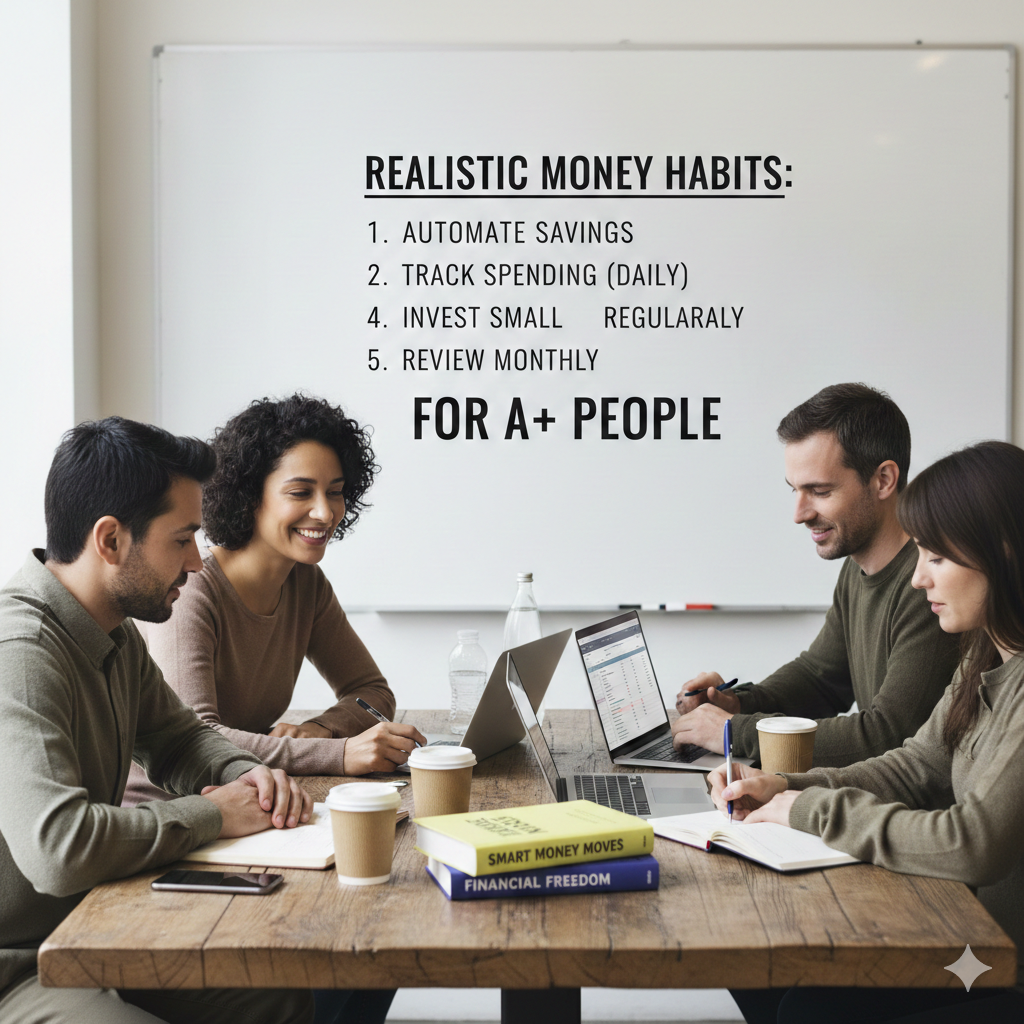
Automating Money Habits Removes Willpower
Willpower is unreliable. Even the most motivated people forget things, get tired, or feel overwhelmed. Automation solves this problem by removing daily decision-making.
Automating savings, bill payments, and minimum debt payments creates consistency without effort. Small automated actions repeated over time lead to meaningful results.
Money systems work best when they run quietly in the background.
Saving Before You Feel Ready Changes Everything
Many people postpone saving until they earn more or feel more stable. Unfortunately, financial stability rarely appears before the habit of saving exists.
Saving even a small amount builds confidence and reinforces the belief that progress is possible. As income increases, the habit scales naturally.
Waiting delays progress. Starting imperfectly creates momentum.
A Realistic Monthly Budget Example
Here’s an example of a balanced, realistic budget for an average monthly income. It prioritizes essentials while still allowing room for enjoyment and flexibility.
| Category | Percentage | Monthly Amount |
|---|---|---|
| Housing | 35% | $875 |
| Food | 15% | $375 |
| Transportation | 10% | $250 |
| Utilities | 8% | $200 |
| Savings | 10% | $250 |
| Lifestyle & Fun | 12% | $300 |
| Miscellaneous | 10% | $250 |
| Total | 100% | $2,500 |
This structure isn’t idealized. It reflects how real people live, spend, and adapt.
Fun Spending Is Part of Financial Health
Completely cutting out enjoyment often leads to resentment and binge spending. Normal people want to enjoy life — and they should.
When fun spending is planned, it becomes intentional instead of impulsive. Enjoyment within limits builds balance and prevents burnout.
Money should enhance your life, not restrict it.
Sinking Funds Turn Predictable Stress Into Control
Many expenses feel unexpected, but they happen regularly: car repairs, holidays, medical costs, annual subscriptions.
Sinking funds prepare you for these expenses gradually. Instead of panic or debt, you respond with confidence.
Preparedness is one of the most underrated financial habits.
Debt Payoff Should Fit Your Real Life
Complex financial systems often fail because they require too much effort to maintain. Simplicity increases consistency and reduces friction.
| Simple System Component | Purpose |
|---|---|
| One checking account | Daily expense management |
| One savings account | Long-term financial security |
| One budgeting method | Financial organization |
Simple systems are easier to maintain and more likely to succeed over time.
Simple Money Systems Always Win Long Term
Complex financial systems look impressive but often fail in practice. The more moving parts a system has, the harder it becomes to maintain.
Most people succeed with simple setups: one checking account, one savings account, and one budgeting method. Simplicity reduces friction and increases consistency.
If your system feels heavy, it’s unlikely to last.

Redefining Financial Success for Normal People
Financial success isn’t about perfection, extreme frugality, or unrealistic milestones. It’s about stability, confidence, and control.
For most people, success means paying bills on time, having some savings, and feeling less stressed about money than before.
That progress is real — and it matters.
Conclusion
Managing money well doesn’t require extreme discipline or flawless behavior. It requires systems that work even when life is messy, motivation is low, and circumstances change.
Realistic money habits prioritize consistency over perfection, flexibility over rigidity, and progress over pressure. They allow room for mistakes while still guiding you forward.
Over time, these habits reduce stress, build confidence, and create stability. Money stops being a source of constant anxiety and becomes a tool you can use intentionally.
You don’t need to change everything at once. You don’t need to follow every rule. You don’t need to be perfect.
You just need habits that fit your real life — and the patience to let them work.
Frequently Asked Questions (FAQs)
What are realistic money habits for everyday life?
Realistic money habits include saving small amounts regularly, spending intentionally, and avoiding unnecessary debt. These habits are sustainable and adaptable.
Why are small money habits more effective than drastic changes?
Small habits are easier to maintain over time. Consistency matters more than intensity when building long-term financial stability.
How long does it take to build healthy money habits?
Most habits take a few months to become routine. The key is repetition and gradual improvement rather than immediate perfection.
How do money habits affect long-term financial success?
Strong money habits create discipline, reduce financial stress, and support long-term goals like home ownership or retirement.
Can money habits change at any age?
Yes, money habits can be changed at any stage of life. Awareness and commitment are more important than age.



Muy buen artículo 👍. Me gusta que enfoque los hábitos de dinero de forma realista y aplicable para personas normales, no solo teoría complicada. Tener metas pequeñas, un presupuesto flexible y automatizar cosas como el ahorro son ideas que realmente ayudan a mejorar las finanzas sin frustrarse en el intento. Gracias por contenido tan claro y útil.