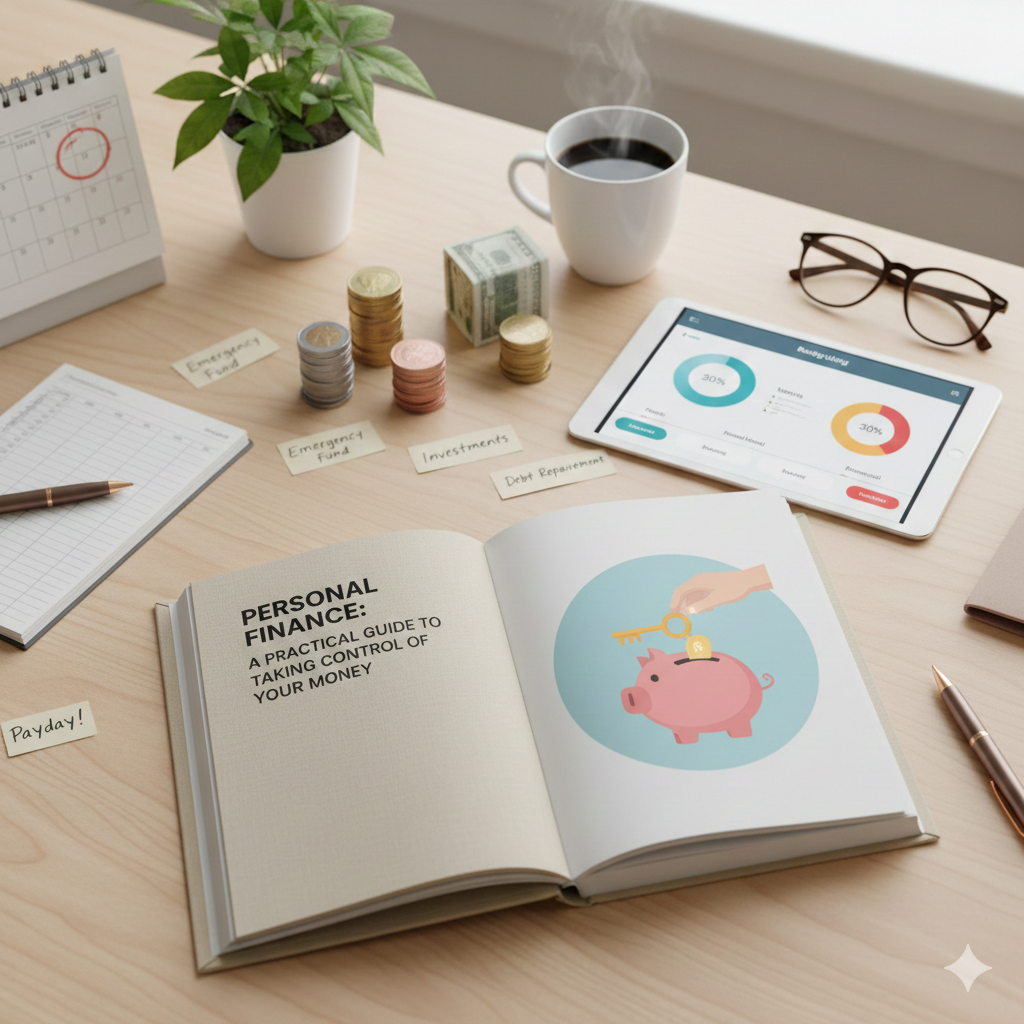
Personal Finance: A Practical Guide to Taking Control of Your Money
Managing money is one of the most important life skills, yet it’s rarely taught in school. Many people reach adulthood without understanding how budgeting works, how to save effectively, or how to avoid common financial mistakes. If that sounds familiar, you’re not alone.
This guide to finance for beginners is designed to help you build a strong financial foundation from scratch. Whether you’re just starting your career, trying to get out of debt, or simply want to feel more confident about money, this article will walk you through the essentials in a clear and practical way.
By the end, you’ll understand how to manage your income, control your expenses, save for emergencies, and make smarter financial decisions—without complicated jargon or unrealistic advice.
What Are Personal Finances and Why Do They Matter?
Personal finance refers to how you manage your money on an individual level. This includes earning income, spending, saving, investing, and protecting yourself against financial risks. While the concept sounds simple, the impact of good or bad financial habits can shape your entire life.
When you understand basic finance, you gain control over your choices. You’re no longer reacting to money problems; instead, you’re planning ahead. Good personal finance helps you reduce stress, avoid unnecessary debt, and work toward long-term goals like buying a home, starting a business, or retiring comfortably.
For beginners, the most important thing to understand is that personal finance is not about being rich—it’s about being intentional. Even modest incomes can support a stable and secure life when managed wisely.
Understanding Income and Expenses
Before you can improve your finances, you need clarity. That starts with understanding two basic elements: income and expenses.
Income: More Than Just Your Salary
Income includes all the money you receive on a regular basis. For most people, this comes from a job or business, but it can also include freelance work, side hustles, investments, or passive income streams.
As a beginner, your main focus should be on making your income predictable and stable. While increasing income is important, it’s often easier and more effective to control expenses first.
Expenses: Fixed vs. Variable Costs
Expenses are everything you spend money on. These can be divided into two categories:
- Fixed expenses: Rent, mortgage, insurance, loan payments, subscriptions.
- Variable expenses: Food, entertainment, transportation, shopping, travel.
Many beginners underestimate how much they spend on variable expenses. Tracking these costs is one of the fastest ways to improve your financial situation without earning more money.
How to Create a Simple Budget That Actually Works
Budgeting is the foundation of personal finance, but it’s often misunderstood. A budget is not about restriction—it’s about awareness and priorities.
The Purpose of a Budget
A budget helps you:
- Know where your money goes
- Avoid overspending
- Plan for future expenses
- Align your spending with your goals
Without a budget, it’s easy to live paycheck to paycheck, even with a decent income.
The 50/30/20 Rule for Beginners
| 50/30/20 Budgeting Rule | One of the simplest budgeting methods for beginners. |
| Allocation: | – 50% for needs: Housing, utilities, food, transportation – 30% for wants: Entertainment, dining out, hobbies – 20% for savings and debt repayment |
| Key Insight | This framework is flexible and easy to adjust. If your expenses don’t fit perfectly, don’t worry. The goal is progress, not perfection. |
Tools to Help You Budget
You can budget using:
- A simple spreadsheet
- Budgeting apps
- Pen and paper
The best tool is the one you’ll actually use consistently.
The Importance of Saving Money Early
Saving money is often the hardest habit to build, especially for beginners. But it’s also one of the most powerful.
Why Saving Comes Before Investing
Many beginners want to jump straight into investing. While investing is important, saving should come first. Savings protect you from unexpected events and prevent you from relying on debt.
Building an Emergency Fund
An emergency fund is money set aside for unexpected expenses like medical bills, car repairs, or job loss.
A good starting goal is:
- $1,000 as a beginner emergency fund
- Eventually, 3–6 months of living expenses
This fund should be kept in a safe, accessible place, such as a high-yield savings account.
How to Save Consistently
The easiest way to save is to automate it. Treat savings like a bill you pay to yourself every month. Even small amounts add up over time.
Understanding Debt and How to Manage It
Debt is one of the biggest obstacles beginners face in personal finance. Not all debt is bad, but unmanaged debt can limit your future options.
Good Debt vs. Bad Debt
- Good debt: Student loans, mortgages (when manageable)
- Bad debt: High-interest credit cards, payday loans, consumer debt
The key difference is whether the debt helps you build long-term value or holds you back.
Strategies to Pay Off Debt
Two popular methods are:
- Debt snowball: Pay off smallest debts first for motivation
- Debt avalanche: Pay off highest interest rates first to save money
Both work. Choose the one that keeps you consistent.
Introduction to Investing for Beginners
Investing is how you grow your money over time, but it doesn’t have to be complicated.
Why Investing Matters
Saving protects your money. Investing helps it grow. Over the long term, investing can help you beat inflation and build wealth.
Basic Investment Options
Beginners should focus on simple, low-risk options:
- Index funds
- ETFs
- Retirement accounts
You don’t need to be an expert or time the market. Consistency matters more than perfection.
The Power of Compound Interest
Compound interest means earning interest on your interest. Starting early—even with small amounts—can make a huge difference over decades.
Common Financial Mistakes Beginners Should Avoid
| Common Financial Mistakes | Many financial problems come from simple mistakes. |
| Typical Mistakes: | – Not tracking expenses – Relying too much on credit cards – Avoiding budgeting – Trying to get rich quickly – Ignoring financial education |
| Key Insight | Avoiding these mistakes can put you ahead of most people financially. |
Conclusion
Learning finance for beginners is not about mastering complex strategies—it’s about building habits that support your future. By understanding your income, controlling expenses, saving consistently, and avoiding common mistakes, you create a strong foundation for financial stability.
You don’t need to change everything at once. Start small, stay consistent, and keep learning. Over time, your relationship with money will improve, and so will your confidence.
Frequently Asked Questions (FAQs)
How much money should a beginner save each month?
There’s no universal number, but a good rule of thumb is to save at least 20% of your income if possible. If that feels overwhelming, start with 5% or 10%. The most important thing is consistency. Saving regularly builds discipline and creates financial security over time.
For beginners, saving should focus first on an emergency fund. Once that’s in place, savings can be directed toward long-term goals like retirement, education, or investing.
Is it better to save or pay off debt first?
It depends on the type of debt. High-interest debt, such as credit card balances, should usually be prioritized. However, beginners should still build a small emergency fund before aggressively paying off debt. This prevents new debt when unexpected expenses arise.
A balanced approach—saving a little while paying down debt—is often the most sustainable strategy.
Do I need a lot of money to start investing?
No. Many investment platforms allow beginners to start with very small amounts. What matters most is starting early and investing consistently.
Beginners should focus on low-cost, diversified investments rather than trying to pick individual stocks. Over time, small investments can grow significantly thanks to compound interest.
What is the easiest budget method for beginners?
The easiest method is the one you’ll actually stick to. For most beginners, the 50/30/20 rule works well because it’s simple and flexible.
If that feels too rigid, you can also start by tracking expenses for one month and making small adjustments. Budgeting is a skill that improves with practice.
How long does it take to become good at managing money?
Managing money is a lifelong skill, but most beginners start seeing improvement within a few months. As you build habits like budgeting, saving, and reviewing your finances regularly, confidence grows quickly.
The key is consistency, not perfection. Small, steady improvements lead to long-term financial success.