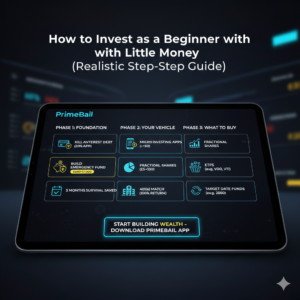
How to Invest With Little Money: A Complete Beginner’s Guide Step by Step

Investing is often presented as something reserved for people with high salaries, financial knowledge, or thousands of dollars sitting in their bank accounts. That belief stops many people before they even start.
The reality is very different.
Today, you can start investing with very little money, even if you are a complete beginner, have no financial background, and feel unsure about risk. The key is not how much money you have, but how you approach investing from the beginning.
This guide is written specifically for people starting from zero. No jargon, no hype, and no unrealistic promises. By the end, you’ll understand where to invest with little money, how to choose the right option for you, and how to avoid the most common beginner mistakes.
Can You Really Invest With Little Money?
Yes, absolutely.
Thanks to technology, online platforms, and new investment products, the minimum amounts required to start investing have dropped dramatically. You no longer need thousands of dollars to buy stocks, funds, or diversified portfolios.
Today, you can:
- Invest $10, $50, or $100 at a time
- Buy fractions of stocks or ETFs
- Automate monthly investments
- Diversify even with small amounts
What matters most is starting early and being consistent, not investing large sums from day one.
How Much Money Do You Need to Start Investing?
There is no universal minimum, but here’s a realistic breakdown:
- $10–$50 → Micro-investing apps, fractional shares
- $50–$100 → ETFs, index funds, robo-advisors
- $100+ monthly → Long-term diversified strategies
If you can invest even a small amount every month, you already have everything you need to start.
The biggest mistake beginners make is waiting for “more money” instead of building the habit early.
The First Thing to Do Before Investing (Most People Skip This)
Before choosing platforms or products, you need to answer one simple question:
What is this money for?
Are you investing to:
- Learn how investing works?
- Build long-term wealth?
- Save for a future goal (house, retirement, financial security)?
If you’re starting with little money, your main goal should be learning and consistency, not quick profits.
Once that’s clear, investing becomes much simpler.
Best Ways to Invest With Little Money (Beginner Friendly)
Below are the most accessible and commonly recommended options for beginners with limited capital.
1. Index Funds
Index funds are one of the simplest and safest ways to start investing.
They work by tracking a market index (like the S&P 500), which means your money is spread across many companies instead of betting on one.
Why beginners like index funds:
- Instant diversification
- Low fees
- Long-term growth
- Minimal effort required
You don’t need to understand individual companies. You’re investing in the market as a whole.
2. ETFs (Exchange-Traded Funds)
ETFs are similar to index funds but are traded like stocks.
With many platforms, you can buy fractional ETFs, making them accessible even with small amounts of money.
Advantages of ETFs:
- Low entry cost
- Diversification
- Flexibility (buy and sell easily)
- Suitable for monthly investing
For beginners, broad-market ETFs are usually the safest starting point.

3. Robo-Advisors
Robo-advisors are automated platforms that build and manage a portfolio for you.
You answer a few questions about your goals and risk tolerance, and the platform does the rest.
Why robo-advisors are beginner-friendly:
- No financial knowledge required
- Automatic diversification
- Rebalancing included
- Low minimum investments
They’re ideal if you want a “set it and forget it” approach.
4. Fractional Shares
Fractional investing allows you to buy a portion of a stock instead of the full share.
This means you can invest in well-known companies without needing hundreds or thousands of dollars.
While this option is popular, beginners should avoid focusing too much on individual stocks at first and prioritize diversification.
5. Micro-Investing Apps
Micro-investing platforms let you invest small amounts automatically, sometimes by rounding up daily purchases.
They’re great for:
- Building the habit of investing
- Starting with very little money
- Learning without pressure
However, they should be seen as a starting point, not a long-term strategy on their own.
Where Should Beginners Avoid Investing at First?
| Investment Options to Avoid When Starting Small | When you’re starting with little money, some investment options carry high risk and low probability of success. |
| High-Risk Options | – Day trading – Highly speculative stocks – Complex derivatives – “Get rich quick” schemes – Unresearched cryptocurrencies |
How to Invest With Little Money Step by Step
Here’s a simple process you can follow:
- Choose a beginner-friendly platform
- Start with a small, comfortable amount
- Pick a diversified option (ETF, index fund, or robo-advisor)
- Automate monthly contributions
- Leave your investment alone
Consistency matters more than perfection.
Common Mistakes When Investing Small Amounts
| Category | Details |
|---|---|
| Behavioral Mistakes for Beginner Investors | Most beginners don’t fail because of bad investments, but because of behavior. |
| Common Mistakes to Avoid: | – Trying to time the market- Constantly checking prices- Switching strategies too often- Investing money you might need soon- Giving up after small losses |
| Key Insight | Investing is not about excitement; it’s about discipline. |
Is It Worth Investing Small Amounts?
Yes — and more than you think.
Small investments grow through:
- Compound interest
- Habit formation
- Experience over time
Starting small allows you to learn without fear. Once your income grows, you’ll already have the skills and confidence to invest more effectively.
Long-Term Mindset: The Real Advantage of Starting Small
People who start investing early with little money develop:
- Financial discipline
- Emotional control
- Long-term thinking
Those skills matter far more than starting capital.
Conclusion
You don’t need to be rich, highly educated, or experienced to start investing. What truly matters is having a small amount of money to begin with, a long-term mindset, and a simple, consistent strategy that you can stick to over time. Starting small is not a disadvantage—in fact, it’s often the smartest way to begin. By starting with manageable amounts, you give yourself the opportunity to learn, adjust, and grow your investments gradually, while avoiding unnecessary risks. Over time, consistency and patience can turn even modest contributions into significant financial progress, proving that the key to investing success is not how much you start with, but how steadily you commit to the process.
Frequently Asked Questions (FAQs)
Can I invest with no experience at all?
Yes. Many platforms and investment products are designed specifically for beginners with zero experience.
Is investing small amounts safe?
All investing carries risk, but diversified options like index funds and ETFs are considered among the safest for beginners.
How often should I invest?
Monthly investing is ideal. Consistency matters more than timing.
Can I lose all my money?
If you invest in diversified, long-term products and avoid speculation, the risk of losing everything is very low.
Should I wait until I have more money?
No. Starting early with small amounts is better than waiting and doing nothing.