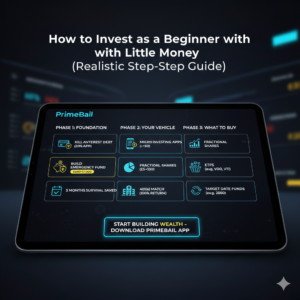
How to Invest as a Beginner with Little Money (Realistic Step-by-Step Guide)
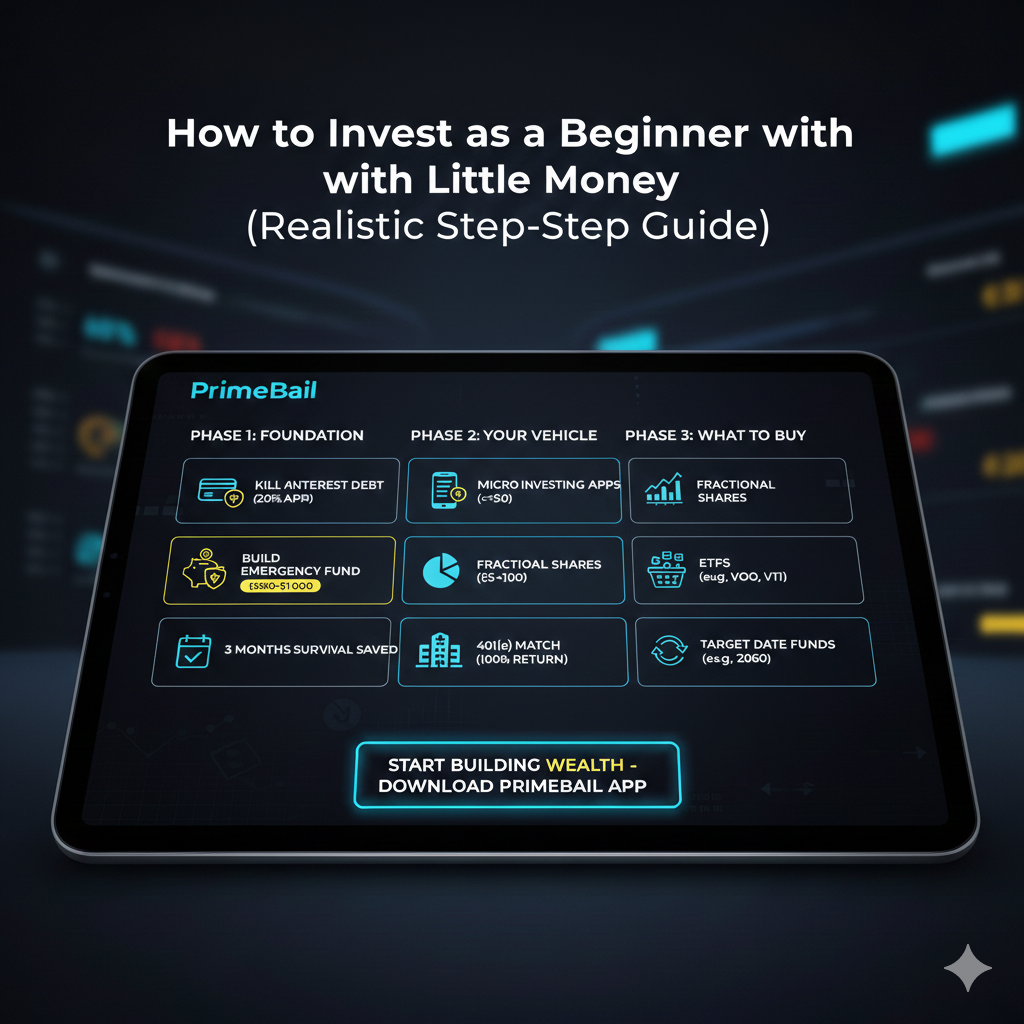
If you’re here, you’re probably thinking something like this:
“I want to start investing… but I don’t have much money. Is it even worth it?”
That was exactly my situation.
I didn’t have thousands saved. I didn’t come from a finance background. I just knew one thing: I didn’t want to stay financially stagnant forever.
And here’s the truth most people don’t tell you:
You do not need a lot of money to start investing.
You need clarity, discipline, and a simple strategy.
In this guide, I’ll show you how to invest as a beginner with little money, what to avoid, where to start, and what realistic expectations look like.
No hype. No “get rich quick.” Just a smart beginning.
Can You Really Invest with Little Money?
Short answer: yes.
Long answer: yes — but only if you understand what “investing” really means.
When I first looked into investing, I assumed it was only for people with large portfolios. I thought you needed at least €5,000 or €10,000 to make it meaningful.
What I discovered instead changed everything:
You can start investing with as little as €10–€100 per month.
Thanks to:
- Fractional shares
- ETFs
- Index funds
- Robo-advisors
- Zero-commission brokers
The barrier to entry has never been lower.
But here’s the key:
Investing small amounts won’t make you rich next year.
It builds long-term financial leverage.
And that’s where most beginners get confused.
Before You Invest Your First Euro (Or Dollar)
Before I invested my first €50, I forced myself to answer three questions.
If you skip this part, you’re gambling — not investing.
What Is My Goal?
Are you investing for:
- Long-term wealth?
- Financial independence?
- Retirement?
- Passive income?
- Learning experience?
In my case, I wanted long-term growth. I wasn’t trying to “flip” money quickly.
Your strategy depends entirely on your goal.
Short-term mindset = higher risk.
Long-term mindset = compounding advantage.
Can I Afford to Lose This Money?
You said you’re not afraid of losing money. That’s good — but let’s refine it.
Investing always involves risk. Markets go up and down.
You should only invest money you won’t need in the next 3–5 years.
Before starting, make sure you have:
- An emergency fund (at least 3 months of expenses)
- No high-interest debt
- Stable monthly income
When I started, I made sure my basic expenses were covered. That gave me peace of mind and prevented panic selling.
Do I Understand the Basics?
You don’t need to be a financial expert.
But you should understand:
- What stocks are
- What ETFs are
- What diversification means
- What risk tolerance is
- What compound interest does
Let’s simplify these quickly.
Investing Basics for Complete Beginners
If you’re starting from zero, here’s what you need to know.
What Is a Stock?
A stock represents ownership in a company.
If you buy Apple stock, you own a tiny part of Apple.
If the company grows, your investment can grow.
But stock prices fluctuate daily.
What Is an ETF?
An ETF (Exchange Traded Fund) is a basket of many stocks combined into one investment.
Instead of buying one company, you buy hundreds at once.
Example:
An S&P 500 ETF invests in 500 large U.S. companies.
For beginners with little money, ETFs are often safer than individual stocks because they are diversified.
When I realized I didn’t need to “pick the next Tesla,” everything became easier.
What Is Diversification?
Diversification means not putting all your money into one asset.
Instead of investing €100 in one company, you spread it across many.
This reduces risk.
What Is Compound Interest?
Compound interest is when your returns generate additional returns.
It’s slow at first — then powerful.
If you invest €100 monthly at 8% annual return:
- After 10 years: ~€18,000 invested → ~€29,000 total
- After 20 years: ~€36,000 invested → ~€59,000 total
- After 30 years: ~€54,000 invested → ~€136,000 total
Time matters more than starting capital.
That’s why starting with little money today beats waiting five years to “have more.”

Where to Invest as a Beginner with Little Money
Now let’s get practical.
If you’re starting with €50–100 per month, these are your best options.
ETFs and Index Funds (Best for Most Beginners)
If I had to recommend one starting point for almost anyone, it would be low-cost index ETFs.
Why?
- Diversified
- Low fees
- Long-term growth potential
- Easy to manage
- No need to analyze companies
Popular beginner-friendly examples:
- S&P 500 ETFs
- Global market ETFs
- Total world ETFs
You invest monthly and let the market grow over time.
Simple. Boring. Effective.
Fractional Shares
Some platforms allow you to buy parts of expensive stocks.
Instead of buying one full Amazon share, you can invest €20 into Amazon.
This allows small investors to access large companies.
But be careful:
Individual stocks are more volatile.
If you’re a beginner, don’t put all your money into one stock.
Robo-Advisors
Robo-advisors automatically invest your money based on your risk profile.
They:
- Build a diversified portfolio
- Rebalance automatically
- Require little knowledge
Downside: slightly higher fees than DIY ETFs.
But for total beginners, they reduce emotional mistakes.
What to Avoid at the Beginning
When I started researching investing, I almost fell into these traps:
- Day trading
- Crypto hype
- Options trading
- “Guaranteed returns”
- Forex signals
- Influencer stock tips
If you’re investing small amounts, protect your capital.
You don’t need high risk to build wealth.
How to Start Investing Step by Step with €50–100 per Month
Let’s break this down clearly.
Step 1: Define Your Time Horizon
Ask yourself:
Will I need this money in the next 5 years?
If yes → avoid stocks.
If no → long-term ETF investing is suitable.
Step 2: Choose a Broker
Look for:
- Low fees
- No minimum deposit
- Regulated platform
- ETF access
- Fractional shares (optional)
Avoid platforms with hidden commissions.
Step 3: Start Simple
When I began, I was tempted to diversify across 10 different things.
That was unnecessary.
You can start with:
- 1 global ETF
or - 1 S&P 500 ETF
That’s it.
Complexity is not intelligence.
Step 4: Automate Contributions
Set up:
Automatic monthly transfer.
Even €50 per month builds consistency.
Consistency beats intensity.
Step 5: Ignore Market Noise
Markets drop.
Markets crash.
Markets recover.
If you’re investing long term, volatility is normal.
The biggest mistake beginners make?
Panic selling.
If your plan hasn’t changed, don’t change your behavior.
How Much Can You Really Earn Investing Small Amounts?
Let’s set realistic expectations.
If you invest:
€100 per month
For 20 years
At 7% annual average return
You’ll have around €52,000.
Is that life-changing immediately? No.
Is it powerful long-term leverage? Absolutely.
If you increase to €200 per month later, that number grows dramatically.
Investing small amounts works — but time is the multiplier.

The Psychology of Investing as a Beginner
This is rarely discussed, but it matters more than strategy.
When I first started learning about investing, I felt:
- Overwhelmed
- Afraid of making mistakes
- Confused by financial jargon
That’s normal.
Three psychological principles helped me:
Accept That You Won’t Be Perfect
You will:
- Buy before a dip
- Question your strategy
- Compare yourself to others
That’s part of the process.
Focus on Process, Not Results
You can’t control the market.
You can control:
- Monthly contributions
- Risk level
- Fees
- Emotional discipline
Avoid Comparison
Someone will always:
- Invest more
- Earn more
- Take bigger risks
Your strategy should match your reality.
If you’re starting small, own it.
Common Beginner Mistakes (And How to Avoid Them)
Mistake 1: Waiting for the “Perfect Moment”
There is no perfect time.
The best time to start investing was 10 years ago.
The second best time is now.
Mistake 2: Overcomplicating Everything
You don’t need:
- 12 ETFs
- 6 stocks
- 3 crypto assets
- Daily trading
Start simple.
Mistake 3: Chasing High Returns
If someone promises 20% monthly returns, run.
Sustainable long-term investing averages 6–10% annually.
Anything far above that involves extreme risk.
Mistake 4: Ignoring Fees
High fees destroy small portfolios.
Always check:
- Expense ratio
- Trading commissions
- Platform costs
Even 1% difference compounds over decades.
Is Investing with Little Money Worth It?
Yes — but not because it makes you rich quickly.
It’s worth it because it builds:
- Financial discipline
- Investment knowledge
- Long-term assets
- Confidence
- Wealth habits
When I realized I didn’t need thousands to begin, investing stopped feeling intimidating.
It became a habit.
And habits build wealth.
Long-Term Strategy for Beginners with Low Capital
If I were starting today from zero with €100 per month, I would:
- Build emergency fund first
- Invest monthly into a global ETF
- Increase contributions when income grows
- Avoid speculation
- Rebalance once per year
- Stay invested for 10+ years
Simple system. High probability.
No financial genius required.
Conclusion
Here’s something powerful:
Starting small teaches you discipline without catastrophic risk.
If you lose 10% on €100, you lose €10.
You learn cheaply.
If you wait until you have €20,000 without experience, your mistakes are expensive.
Small beginnings create intelligent investors.
And intelligent investors build wealth slowly, steadily, and sustainably.
Frequently Asked Questions (FAQs)
How much money do I need to start investing?
You can start with €10–€100 depending on the platform.
Is investing risky?
Yes. But diversified long-term investing reduces risk significantly.
Can I lose all my money?
If you invest in diversified ETFs, total loss is extremely unlikely unless the global economy collapses.
Should I invest or save first?
Build an emergency fund first. Then invest.
What is the safest investment for beginners?
Low-cost diversified ETFs or index funds.