Personal Finance: How to Develop a Rich Mindset From Scratch
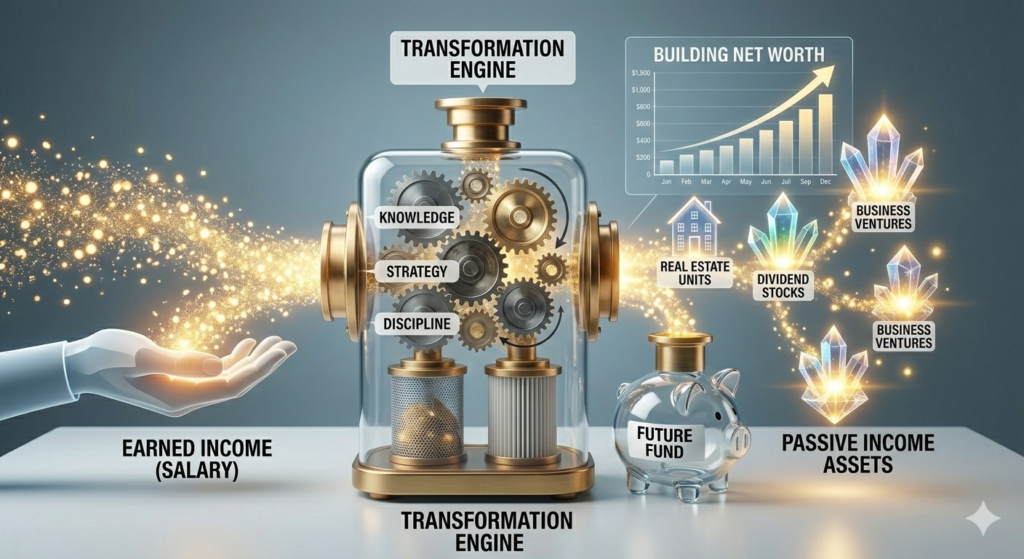
Money doesn’t start in your bank account. It starts in your mind.
For years, I believed that earning more was the solution to all my financial problems. If I could just increase my income, everything would magically fall into place. But the truth hit me hard: my problem wasn’t how much I earned — it was how I thought about money.
This article is not about fantasy wealth. It’s about personal finance, behavioral change, and how to build a rich mindsetstep by step — even if you’re starting from zero.
We’ll combine psychology, financial strategy, practical habits, and structured action.
What a Rich Mindset Really Is (And What It Is Not)
A rich mindset has very little to do with income level.
It has everything to do with:
- Long-term thinking
- Ownership mentality
- Emotional control over money
- Asset-focused decisions
- Responsibility for outcomes
Many people misunderstand wealth psychology because they confuse external status with internal structure.
A rich mindset is:
- Strategic, not reactive
- Calm, not emotional
- Calculated, not impulsive
- Long-term oriented, not instant gratification driven
A poor mindset, on the other hand, tends to:
- Spend to feel better
- Avoid financial responsibility
- Fear investing
- Blame external circumstances
I used to believe money was difficult and scarce. I would think, “People like me don’t become wealthy.” That belief alone shaped my behavior. And behavior determines results.
The shift began when I understood that wealth is behavioral before it is numerical.
Rich vs Poor Mindset: The Core Differences
Below is a structured comparison that summarizes the psychological gap.
| Poor Financial Mindset | Rich Financial Mindset |
|---|---|
| Focuses on income only | Focuses on assets and systems |
| Spends first, saves later | Pays themselves first |
| Avoids financial education | Invests in learning |
| Thinks short term | Thinks 5–10 years ahead |
| Fears calculated risk | Understands risk management |
| Blames circumstances | Assumes responsibility |
One of my biggest realizations was this: wealthy people think in terms of ownership.
They don’t ask:
“How much does this cost?”
They ask:
“Does this create value or cash flow?”
That question alone changed how I saw money.

The Beliefs That Keep Most People Financially Stuck
Mental blocks around money are extremely common.
Here are the most destructive ones:
- “Money is the root of all evil.”
- “Investing is gambling.”
- “I’m just bad with money.”
- “Rich people are greedy.”
- “I’ll start saving when I earn more.”
I used to say, “When I make more money, I’ll start investing.” That day never came — because my expenses grew with my income.
The problem wasn’t math. It was identity.
Until you see yourself as someone capable of building wealth, you will unconsciously sabotage every financial opportunity.
The Turning Point: Understanding That Money Is Behavior
The day everything changed for me wasn’t when I got a raise.
It was when I understood one simple principle:
Income does not create wealth. Behavior does.
You can earn six figures and still live paycheck to paycheck.
You can earn an average salary and build net worth consistently.
That realization pushed me to study behavioral finance and classic wealth-building principles popularized by authors like Robert Kiyosaki, author of Rich Dad Poor Dad, and T. Harv Eker, author of Secrets of the Millionaire Mind.
But instead of just consuming ideas, I implemented them.
That’s where real transformation happens.
Step-by-Step: How I Changed My Financial Mindset
1. I Started Paying Myself First
Everything shifted the day I automated savings before spending.
Not after.
Before.
Even if it was just 10%.
That single habit created:
- Financial awareness
- Discipline
- Confidence
- Compounding growth
2. I Separated Needs From Status Spending
For years, I spent to impress people who didn’t care.
Once I stopped chasing image, I started building assets.
Ask yourself:
- Does this purchase increase my long-term value?
- Or is it emotional spending?
This question alone saved me thousands.
3. I Redefined Risk
I used to fear investing.
Then I understood something critical:
Not investing is also a risk.
Inflation is risk.
Dependence on one income source is risk.
Lack of skills is risk.
Once I understood risk management instead of risk avoidance, my confidence grew.
7 Practical Habits That Build a Rich Mindset
Here are actionable behaviors you can implement immediately:
1. Track Every Dollar
Awareness creates control.
2. Automate Investments
Remove emotion from decisions.
3. Read Financial Literature Monthly
Financial literacy compounds.
4. Increase Income Intentionally
Skill-building > hoping for raises.
5. Surround Yourself With Growth-Oriented People
Environment shapes behavior.
6. Think in Assets, Not Expenses
Assets generate income or appreciate.
7. Delay Gratification
The ability to wait is a wealth superpower.
When I applied even half of these consistently, I noticed something unexpected:
I felt calmer about money.
Wealth isn’t just numbers. It’s emotional stability.
The Psychology of Money: Why Most People Never Become Wealthy
Most financial failure is not intellectual.
It’s emotional.
Here are psychological traps:
- Instant gratification bias
- Lifestyle inflation
- Fear-based decision-making
- Social comparison
- Lack of long-term planning
We live in a consumption-driven society.
Everything encourages spending.
Very little encourages ownership.
That’s why building a rich mindset requires conscious resistance.

Long-Term Thinking: The Real Wealth Accelerator
The wealthy think in decades.
The average person thinks in weeks.
If you invest $300 monthly at a modest return for 20 years, compounding becomes powerful.
| Monthly Investment | Years | Potential Outcome (Moderate Growth) |
|---|---|---|
| $300 | 5 | Modest growth |
| $300 | 10 | Significant accumulation |
| $300 | 20 | Substantial compounding effect |
The exact numbers matter less than the principle:
Time + Consistency = Wealth
When I shifted from short-term dopamine to long-term strategy, my decisions became clearer.
Identity Shift: The Most Important Step
You cannot outperform your identity.
If you see yourself as:
- “Bad with money”
- “Financially unlucky”
- “Not business-minded”
You’ll act accordingly.
Instead, I started telling myself:
“I am someone who builds assets.”
At first, it felt fake.
Over time, it became true.
Behavior follows identity.
A Practical 30-Day Action Plan
Here’s a structured starting framework:
Week 1: Awareness
- Track spending daily
- Calculate total monthly expenses
- Identify 3 unnecessary costs
Week 2: Structure
- Open a separate savings/investment account
- Automate a percentage transfer
- Create a simple budget
Week 3: Education
- Read one financial book
- Study basic investing concepts
- Learn about asset classes
Week 4: Expansion
- Identify one income-growth skill
- Research one investment vehicle
- Set a 5-year financial goal
Clarity reduces anxiety.
Action builds confidence.
Rich Mindset Is About Control, Not Luxury
Luxury is a byproduct.
Control is the foundation.
True financial wealth provides:
- Choice
- Time freedom
- Reduced stress
- Negotiation power
- Long-term security
When I stopped chasing “looking rich” and focused on “being financially strong,” everything aligned.
Common Mistakes When Trying to Develop a Rich Mindset
- Consuming motivation without implementation
- Trying to get rich quickly
- Investing without understanding fundamentals
- Comparing yourself constantly
- Quitting after small setbacks
Building wealth is boring.
And that’s a good thing.
Boring systems outperform emotional decisions.
Final Perspective: Wealth Is Built Quietly
There was no dramatic moment in my journey.
No lottery.
No overnight success.
Just gradual shifts:
- Spending less impulsively
- Investing consistently
- Thinking long-term
- Learning continuously
- Accepting responsibility
The day I started paying myself first, everything changed.
Not because I became rich instantly.
But because I became disciplined.
And discipline compounds faster than motivation.
Conclusion
Developing a rich mindset is not about pretending to be wealthy.
It’s about:
- Changing your financial identity
- Rewiring emotional patterns
- Building consistent habits
- Thinking in decades, not days
- Choosing ownership over consumption
Your income may stay the same at first.
Your bank balance might not explode immediately.
But once your mindset shifts, your decisions shift.
And once decisions shift, outcomes follow.
Wealth starts in the mind — and then it becomes measurable.
Frequently Asked Questions (FAQs)
Can anyone develop a rich mindset?
Yes. It’s behavioral, not genetic.
Do I need a high income to start?
No. You need structure and consistency first.
Is investing necessary?
For long-term wealth, yes. Saving alone rarely outpaces inflation.
How long does it take to see results?
Financial stability can improve within months. Significant wealth takes years.
What’s the most important habit?
Paying yourself first and thinking long term.
The information provided in this article is for informational and educational purposes only and does not constitute financial, legal, or investment advice. While efforts are made to ensure accuracy, PrimeBail makes no guarantees regarding completeness or applicability to individual circumstances. Readers are encouraged to consult a qualified professional before making any financial decisions.